
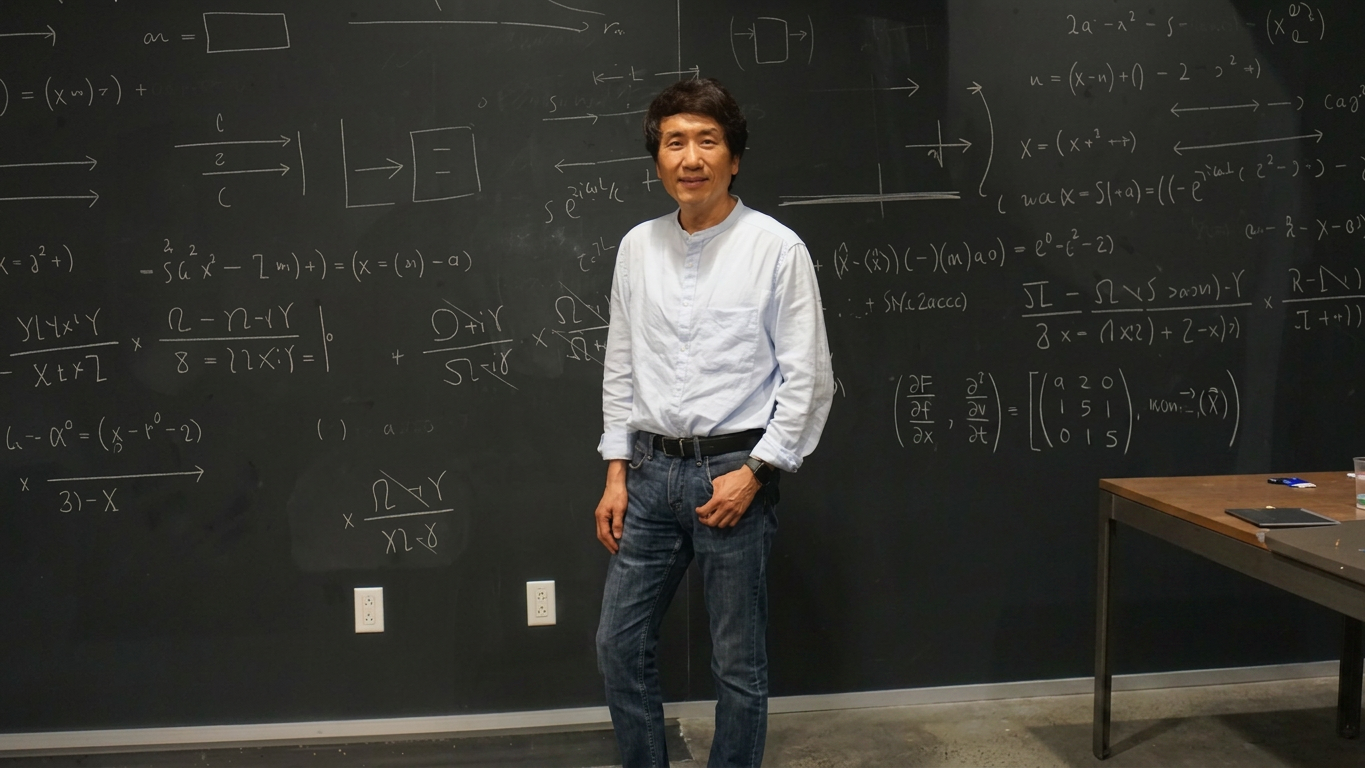
Dr. Jonathan H. Jiang has spent his career at NASA's Jet Propulsion Laboratory studying planets, first our own, then the thousands of strange new worlds now turning up around distant stars. Lately his attention has drifted to a harder question, one that sits at the intersection of astronomy, history, and dread: if the universe is so vast, and so old, where is everybody?
We met to talk about the Great Filter, the idea that somewhere on the long road from lifeless rock to star-faring civilization, there is a barrier almost nothing gets past. The conversation that follows has been condensed and edited for clarity.
The Silence
Vinely: Let's start with the obvious. Why is the sky so quiet?
Dr. Jiang: That quiet is the whole puzzle. We have a galaxy with hundreds of billions of stars, most of them older than the Sun, many with planets in the habitable zone. By any reasonable accounting, technological life should have emerged many times over. And yet we look, and we listen, and we find nothing. The contradiction between "there should be many" and "we see none" is what we call the Fermi Paradox.
What the Filter Might Be
Vinely: And the Great Filter is the proposed answer.
Dr. Jiang: Right. The Great Filter says: somewhere along the chain, the origin of life, the jump to complex cells, the emergence of intelligence, the survival of a technological species, there is at least one step so improbable, or so dangerous, that it stops almost everyone. The unsettling part is that we don't know whether the filter is behind us or ahead of us.
Vinely: Behind us would be the good news.
Dr. Jiang: Behind us means the hard part is already done, that something like the first living cell, or the first complex organism, is the bottleneck, and we are the rare survivors. Ahead of us is the version that keeps me up at night. It would mean the filter is something a young technological civilization tends to do to itself.
Can We Get Through?
Vinely: So can humanity survive the Great Filter?
Dr. Jiang: I'm a cautious optimist. The same tools that make us dangerous, energy, computation, the ability to reshape our environment, are the tools that let us see the danger coming. No other species we know of can model its own extinction and choose differently. That capacity is worth something. The question is whether we use it in time.
Vinely: Last question. If we do make it through, what does that mean?
Dr. Jiang: It would mean we are not just survivors but, possibly, among the first. And if we are early, then the silence isn't a warning, it's an invitation. Someone has to go first.